The Audi SQ5 and Mazda CX-5 both occupy the crossover segment, offering a blend of utility and comfort. The SQ5, with its premium badge and performance-oriented setup, contrasts sharply with the more budget-friendly and widely available CX-5. Kenyan buyers will find the SQ5 appealing for its luxury and power, while the CX-5 offers practicality and better fuel economy, especially with its diesel variants.
On current Garisea listings, the Mazda CX-5 is about 45% cheaper on median asking price, the Audi SQ5 has a newer average fleet, the Mazda CX-5 shows lower average mileage.
| Audi SQ5 | Mazda CX-5 | |
|---|---|---|
| Median price | KSh 5,500,000 | KSh 3,000,000 |
| Typical range | KSh 5,500,000 – KSh 5,500,000 | KSh 2,750,000 – KSh 3,412,500 |
| Avg mileage | 89,250 km | 79,069 km |
| Avg age | ~8 yrs | ~9 yrs |
| Transmission | Automatic | Automatic |
| Fuel | Petrol | Diesel |
| Drive | AWD | AWD |
| Seats | 5 seats | 5 seats |
Audi SQ5
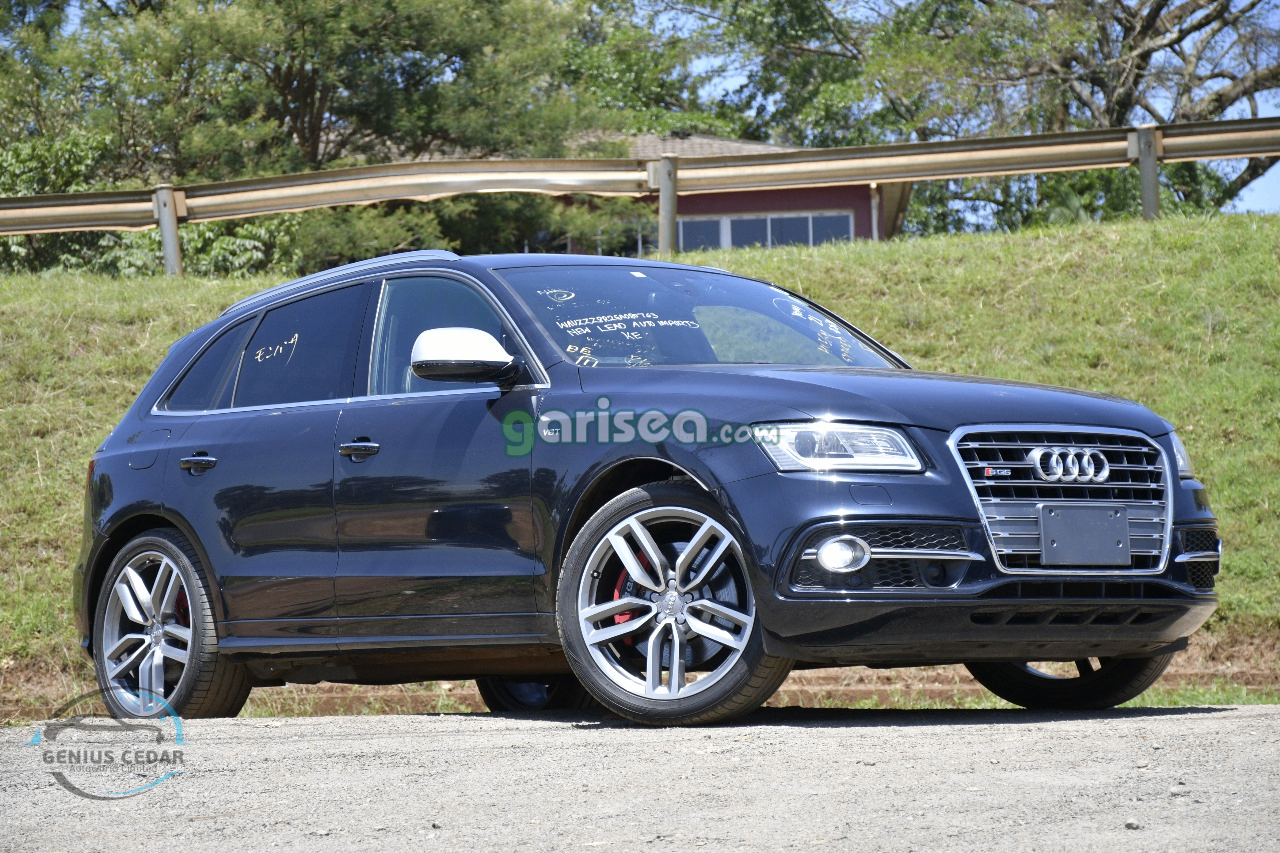
KSh 5,100,000
2016
Mazda CX-5
KSh 1,650,000
2013
Audi SQ5
No distinct trim split.
Mazda CX-5
The Mazda CX-5 is a compact crossover SUV that has gained popularity in Kenya for its blend of style, practicality, and driving dynamics. Primarily available in AWD with a 5-seat configuration, it suits urban families and professionals seeking a comfortable yet capable vehicle for both city and occasional upcountry travel. The model years 2016 to 2019 are commonly found, offering a balance of modern features and affordability.
The CX-5 is generally reliable, with the diesel engines praised for their longevity if well-maintained. However, diesel models require attentive maintenance of the DPF and turbo systems. Petrol engines are simpler and less prone to specific issues, making them a safer choice for those concerned about long-term reliability.
Routine maintenance is straightforward, with oil changes and regular checks being key. Diesel engines need more frequent attention to the fuel system and turbo components. Service intervals are typically every 10,000 km, and while costs are moderate, diesel-specific parts can be pricier. The automatic transmission is robust but requires periodic fluid changes to ensure longevity.
For those prioritizing luxury and performance, the Audi SQ5 stands out, particularly if budget is less of a concern. Its petrol engine delivers impressive power, but be prepared for higher running costs and less availability of parts outside major urban centers like Nairobi. The Mazda CX-5, on the other hand, is ideal for buyers seeking cost-effective and reliable daily transport. Its diesel option is particularly economical for long-distance travel, and parts are more readily available across Kenya, making it suitable for family use and upcountry trips. Resale prospects also favor the CX-5 due to its broader market presence.
Many buyers spread the cost over 12–60 months. See what monthly repayments could look like.
Explore financingOn current Garisea listings, the Mazda CX-5 has the lower median asking price — about 45% cheaper. The Audi SQ5 medians KSh 5,500,000 and the Mazda CX-5 medians KSh 3,000,000.
The Audi SQ5 typically ranges KSh 5,500,000–KSh 5,500,000 (from KSh 5,100,000), and the Mazda CX-5 KSh 2,750,000–KSh 3,412,500 (from KSh 1,650,000), based on active Garisea listings.
The CX-5 is generally reliable, with the diesel engines praised for their longevity if well-maintained. However, diesel models require attentive maintenance of the DPF and turbo systems. Petrol engines are simpler and less prone to specific issues, making them a safer choice for those concerned about long-term reliability.
Figures are asking prices from active Garisea listings (not sale prices). Median and quartiles are used so a few unusually priced listings don't skew the comparison.
Parts for the CX-5 are fairly accessible in Nairobi's Kirinyaga Road and Grogan areas, with a mix of genuine and aftermarket options. Diesel-specific components might be harder to find and more expensive. Mazda's authorised service centres can provide genuine parts and handle complex repairs, though at a premium.
Diesel variants, featuring engines like the 2.2L Skyactiv-D, are notably more economical, especially on highways, but can be slightly thirstier in urban traffic. The petrol models, often equipped with the 2.0L Skyactiv-G, provide smoother performance but tend to consume more fuel, particularly in stop-and-go city conditions.

